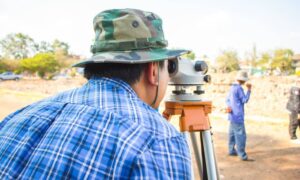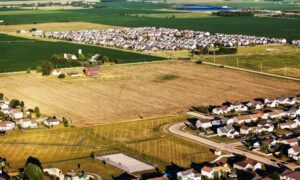

If you’ve ever reviewed a topographic survey and noticed that something doesn’t line up with the deed, you’re not alone. This happens more often than most property owners and contractors expect. A topo survey shows what exists on the ground right now, while a deed describes what should exist on paper. When those two don’t match, confusion follows. However, that mismatch does not mean the survey is wrong. Instead, it signals a deeper process that licensed surveyors handle every day.
Understanding how surveyors resolve these conflicts can save time, money, and stress—especially on small residential parcels.
Why topo data and deed lines don’t always match
At first glance, it feels logical to expect a perfect match. After all, both the topo survey and the deed describe the same property. However, they serve very different purposes.
A deed records legal intent. It describes boundaries using bearings, distances, and references that may be decades old. In contrast, a topographic survey measures current ground conditions. It captures elevations, slopes, structures, and visible features as they exist today.
Because land changes over time, these two sources often disagree. Fences move. Monuments get buried. Trees fall. Driveways get added. As a result, the topo reflects reality, while the deed reflects history. Surveyors must connect the two carefully.
How GPS data fits into a topographic survey
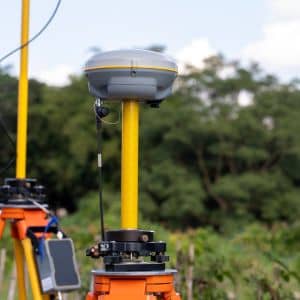
Modern topo surveys rely heavily on GPS and GNSS equipment. These tools provide precise coordinates, which help surveyors map land quickly and accurately. However, GPS does not decide property lines.
GPS points show position, not ownership. They work within coordinate systems designed for measurement, not legal interpretation. Even a small difference—just a few inches—can matter on a residential lot. Because of that, surveyors treat GPS as one tool among many, not the final answer.
Also, accuracy depends on conditions. Tree cover, nearby buildings, and soil conditions can affect signals. That’s why experienced surveyors never rely on GPS data alone when boundaries come into question.
Common reasons site data conflicts appear
Conflicting site data usually has a clear cause. On residential parcels, a few patterns appear again and again.
Older deeds often predate modern coordinate systems. These descriptions relied on tools that lacked today’s precision. Over time, small errors added up.
Next, physical monuments may be missing or disturbed. Iron pins get covered by landscaping. Concrete markers crack or shift. When monuments disappear, surveyors must search for other evidence.
In addition, prior surveys may follow different standards. A survey done years ago may not meet current expectations. That doesn’t make it wrong, but it does mean results can differ.
Finally, many improvements go in without verified boundaries. Fences, sheds, and even driveways often follow assumed lines. When a topo captures those features, conflicts surface.
How surveyors resolve topo and deed conflicts
When topo data and deed lines don’t agree, surveyors follow a clear process. They don’t guess, and they don’t rush.
First, they review all available records. This includes deeds, plats, and past surveys. Each document tells part of the story.
Next, they evaluate field evidence. Surveyors look for monuments, old markers, and long-standing occupation lines. Physical evidence often carries strong weight.
Then, they compare GPS measurements to record data. At this stage, surveyors assess how closely measured points align with legal descriptions. They look for patterns, not isolated points.
After that, they apply boundary principles. These rules guide how conflicts get resolved. For example, original monuments often matter more than measured distances.
Finally, surveyors adjust the topo features to match the resolved boundary. This step ensures that elevations, improvements, and site details relate to the correct legal lines.
Throughout the process, judgment matters. Experience helps surveyors weigh evidence and reach defensible conclusions.
What happens when conflicts delay final mapping
Sometimes, surveyors cannot finalize a topo survey right away. When that happens, it’s usually for a good reason.
They may need more research. They may need to verify a monument. In some cases, they must clarify assumptions before proceeding. Although this can feel frustrating, it protects everyone involved.
Rushing past unresolved conflicts creates bigger problems later. Designs may cross setbacks. Drainage plans may extend onto neighboring land. Construction staking may spark disputes. Taking time upfront avoids those risks.
How unresolved conflicts affect real projects
On paper, a few inches seem minor. On a job site, they can cause real trouble.
A grading plan might place a slope too close to a boundary. A drainage swale might cross into a neighbor’s lot. A building footprint might violate setbacks. Each issue triggers redesigns, delays, or disputes.
Permit reviewers often catch these problems. When they do, projects slow down. That’s why resolving topo and deed conflicts early makes such a difference.
When a second opinion makes sense
In some cases, asking for a review helps. This does not mean the first survey failed. It means the situation is complex.
Consider a second opinion if topo data conflicts with recorded plats, if corners cannot be verified, or if design decisions depend on tight boundaries. Also, if neighbors raise concerns after staking, a review can bring clarity.
Early clarification costs far less than fixing mistakes later.
What to ask before ordering a topographic survey
Clear communication prevents confusion. Before ordering a topo survey, ask a few key questions.
Ask whether boundary resolution is included. Ask how conflicts will be documented. Ask what assumptions the survey will rely on. Also, ask how resolved lines will appear on the final plans.
These questions set expectations and help everyone stay aligned.
The bottom line
When topo data and deed lines don’t match, it doesn’t signal failure. It signals a process at work. A topographic survey shows the land as it exists. A deed shows how it was described. Surveyors bridge that gap using evidence, experience, and judgment.
Understanding this process helps property owners, contractors, and designers make better decisions. It reduces surprises and builds confidence. On small residential parcels, that clarity matters more than ever.