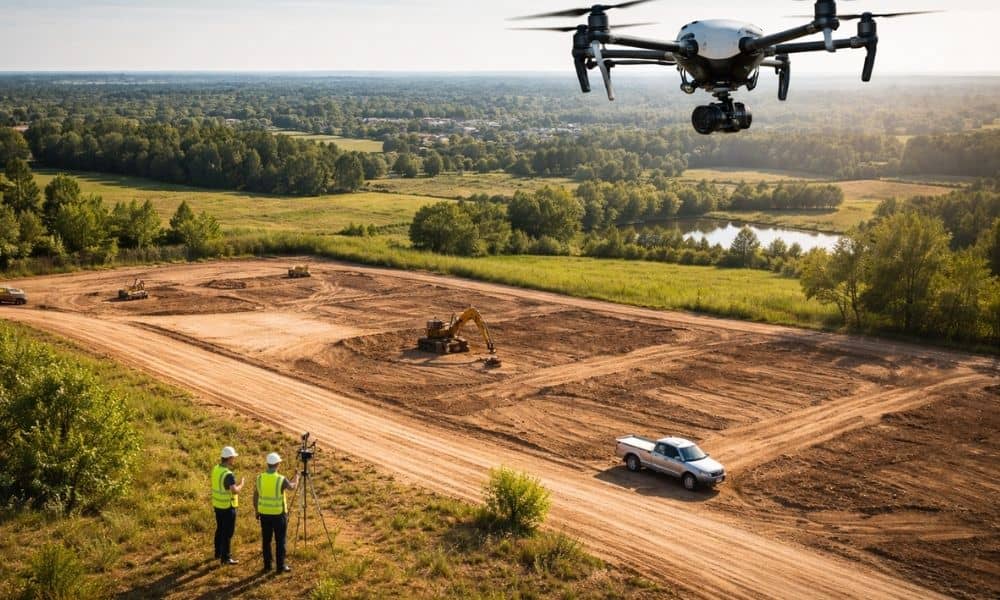
Drone land surveying has moved from a “nice-to-have” tool to a core part of how many development projects begin. A recent breakthrough in unmanned aerial vehicle (UAV) platforms has pushed this shift even further. These new drones can fly longer, plan routes on their own, and collect data more smoothly than before. As a result, site development no longer starts the way it used to.
For property owners, builders, and developers, this change matters. It affects how early decisions are made, how risks are spotted, and how smoothly a project moves from idea to design.
Why the Latest UAV Breakthrough Matters Now
In the past, drones helped surveyors work faster. Today, new UAV platforms do more than save time. They change how surveyors approach a site from the very first visit. With better flight control and smarter systems, survey teams can study land earlier and more thoroughly.
Because of this, drone land surveying now plays a role before major money gets spent. Instead of waiting until design starts, developers can use drone data to decide if a site even makes sense to move forward.
That shift alone changes how site development works.
What’s Different About Today’s Drone Land Surveying
Modern UAVs bring more than better cameras. They bring reliability and planning power. New drones can fly longer paths without stopping. They can also adjust their routes in real time. This allows survey teams to cover large or complex sites in a single session.
At the same time, these drones reduce interruptions in the field. Surveyors can plan flights with fewer gaps, which leads to cleaner results. Because of that, teams spend less time restarting work and more time analyzing the land.
Most importantly, these improvements help surveyors focus on understanding the site, not fighting the tools.
How Drone Land Surveying Changes Early Site Decisions
One of the biggest changes happens at the very start of a project. Drone land surveying now helps answer questions that once came much later.
For example, a developer can see how the land slopes across an entire parcel early on. They can also spot access limits, drainage paths, and layout challenges right away. This helps them avoid buying land that looks good on paper but causes trouble during design.
Because drone land surveying delivers this insight early, clients can make smarter choices. In many cases, they can adjust plans or walk away before costs pile up.
Why Developers Use Drone Land Surveying Earlier Than Before
In the past, surveying often followed land purchase. Today, many developers bring in surveyors before final decisions. That change comes from better drone tools and better expectations.
With early drone land surveying, teams can set realistic goals. They can see how many lots fit on a site. They can estimate grading needs more accurately. They can also plan utilities with fewer surprises.
As a result, early drone data helps shape the project instead of reacting to problems later.
How Site Planning Improves When Survey Data Comes First
When drone land surveying leads the process, site planning flows better. Engineers and designers no longer guess about land conditions. Instead, they work from a clear picture of the site.
This approach supports better layout choices. Roads, buildings, and open spaces fit the land instead of fighting it. Because of that, designs feel more natural and cost less to adjust.
Also, early survey input helps teams work together. Everyone starts from the same information, which reduces confusion and rework.
What This Means for Schedules and Coordination
While speed matters, clarity matters more. Drone land surveying improves coordination by reducing unknowns. When teams understand the site early, they plan with confidence.
For example, engineers can flag concerns sooner. Contractors can set expectations earlier. Review agencies receive cleaner submissions with fewer questions.
Although every project differs, this level of preparation often keeps schedules steady. Instead of reacting to surprises, teams stay focused on progress.
Why Licensed Oversight Still Matters

Even with advanced drones, professional judgment remains essential. Drone land surveying works best when a licensed land surveyor guides the process.
A license ensures the work meets legal standards. It also ensures the data supports real decisions, not just visuals. Technology may collect information, but a surveyor interprets it and applies it correctly.
For clients, this means peace of mind. They know the results support design, construction, and future property records.
When Drone Land Surveying Adds the Most Value
Drone land surveying brings the most value on larger or more complex sites. These include undeveloped tracts, subdivisions, and multi-phase projects. In these cases, early insight can prevent major redesigns.
However, not every project needs drone support at every stage. A good surveyor helps clients choose when and how to use it. That guidance ensures the tool adds value instead of cost.
What Clients Should Ask Before Starting
Before using drone land surveying, clients should ask simple questions. How early will the data guide decisions? How will it support design planning? How does it fit into the overall development timeline?
Clear answers help align expectations. They also help clients see drone land surveying as part of a strategy, not just a service.
How Drone Land Surveying Is Changing the Way Projects Begin
The latest UAV breakthrough shows that drone land surveying now shapes projects from day one. Instead of reacting to land conditions later, teams plan with insight early.
For developers and property owners, this means fewer surprises and better decisions. It means projects start on solid ground, both literally and financially.
As UAV technology continues to improve, drone land surveying will keep redefining site development. The projects that succeed will be the ones that use this tool early, wisely, and under expert guidance.