
Topographic Survey: Why It’s a Must Before Any Construction Project

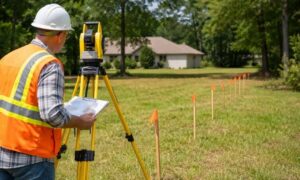
Land surveyor adjusting a level instrument during a topographic survey at a construction site in Georgia.

Before any construction project starts—whether it’s a new home, a commercial building, or a roadway—one of the first and most important steps is a topographic survey. This type of survey maps the natural and man-made features of a piece of land. It shows elevation changes, trees, buildings, slopes, and even drainage patterns. Without this information, builders could run into costly delays or design problems.

What Is a Topographic Survey?

A topographic survey is a detailed map of the land’s surface. It shows not just the shape of the ground, but also things like hills, valleys, fences, roads, and utilities. Surveyors use tools like GPS, total stations, and sometimes drones to collect this data.

This survey helps architects and engineers understand the land before they design anything. It’s also useful for property owners who want to know what’s on their land.

Why It Matters in Construction

Construction teams rely on accurate land data to plan foundations, drainage, and building placement. A topographic survey helps them:

  • Understand slopes and elevation changes
  • Plan for proper drainage
  • Avoid cutting into hills or building on unstable ground
  • Design with the land, not against it

Builders and developers often use topographic surveys for property development to avoid these issues early. Without this step, a project can face water damage, foundation shifts, or the need for expensive redesigns after construction begins.

Local Requirements in Georgia

In places like Columbus and Newnan, GA, a topographic survey may be required by local governments before a construction permit is approved. These surveys help city planners check that your project meets zoning rules and won’t cause flooding or other issues.

Working with a professional land surveyor in Georgia who understands Georgia’s terrain and rules can help keep your project on track.

Problems You Can Avoid

Getting a topographic survey early can prevent many common problems, such as:

  • Grading surprises that increase costs
  • Drainage failures that cause long-term water damage
  • Design changes because the land doesn’t match the blueprints
  • Legal issues if the land overlaps with neighboring property

Who Uses Topographic Surveys?

Many professionals rely on topographic surveys, including:

  • Architects
  • Engineers
  • Real estate developers
  • Contractors
  • Government planners

Even homeowners planning major landscaping work can benefit from this survey.

Final Thoughts

Getting a topographic survey might seem like just another box to check, but it’s one of those steps that can save time, money, and stress down the line. Whether you’re building in Columbus, Newnan, or anywhere else in Georgia, knowing what’s under your feet—literally—can make all the difference. It’s a smart move that most experienced builders wouldn’t skip.


author avatar
Surveyor

More Posts

Land survey for fence placement showing a wooden stake marking the property boundary near an existing fence
boundary surveying
Surveyor

When a Land Survey for Fence Placement Is Required

Building a fence sounds simple. You choose a design, hire an installer, and expect everything to go smoothly. However, many homeowners find out the hard way that fence projects can quickly turn into disputes. In most cases, the problem is not the fence itself. Instead, the issue starts when a

Read More »
Many buyers and sellers are surprised when a real estate deal slows down because of a title issue. Encroachments, mismatched descriptions, or missing survey details are common problems. In many cases, they come from outdated land records that were never corrected. Title companies and lenders depend on accurate surveys to confirm what is actually being sold. When public land records are updated, it helps reduce these problems. Still, many people only look for land surveyors in my area after a closing is already at risk. At that point, deadlines are tight, and options are limited
land surveyor
Surveyor

Why a 50-Year Land Survey Still Matters to Property Owners

Most property owners believe their land boundaries are settled. The fence has always been there. The deed was signed years ago. Property taxes are paid. Everything feels clear—until something suddenly goes wrong. Recent news about a government land survey happening for the first time in 50 years raises an important

Read More »
Surveyors reviewing topographic survey plans to understand site data differences
land surveying
Surveyor

Topographic Survey vs Deed Lines: Why the Data Doesn’t Match

If you’ve ever reviewed a topographic survey and noticed that something doesn’t line up with the deed, you’re not alone. This happens more often than most property owners and contractors expect. A topo survey shows what exists on the ground right now, while a deed describes what should exist on

Read More »
A land surveying professional measuring a site before infrastructure construction begins
land surveying
Surveyor

Why Land Surveying Comes First in Infrastructure Projects

When people hear about new roads, rail lines, or public projects in Savannah, they often picture construction crews and heavy machines. What most people do not see is what happens first. Before any work begins, land surveying sets the stage. Every major infrastructure project starts with measuring the land, checking

Read More »
Drone surveyor capturing aerial data over land for surveying purposes
land surveying
Surveyor

Why Drone Surveyor Expansion Is Changing Survey Speed

In the last few days, news about a major technology company expanding its drone surveyor services has started conversations across the land surveying world. At first, it may sound like another tech update. However, this move shows something much bigger. It signals a real change in how land surveys are

Read More »
Aerial view of land transitioning into a new neighborhood, showing early subdivision design and site planning work
civil engineer
Surveyor

High-Accuracy Subdivision Design With LIDAR and Grading

Planning a new neighborhood takes more than a sketch on a map. Good subdivision design depends on accurate data, smart engineering, and a clear understanding of the land. When developers skip these steps, projects suffer from drainage problems, unexpected soil issues, and higher construction costs. However, when a design starts

Read More »