
Vacant land looks simple. There are no buildings. No tenants. No visible problems. Just open space. Because of that, many buyers assume the process should be easy. However, vacant land often carries more hidden risk than developed property. In fact, when nothing has been built yet, no one has tested the legal limits of that land. That’s where an ALTA land title survey becomes important.
If you’re buying vacant land in a growing area like Newnan or anywhere, you need clarity before you close. Let’s break down when this type of survey makes sense — and when it might not.
Why Vacant Land Can Be More Complicated Than You Think
At first glance, raw land feels clean and simple. Yet legally, it can be messy.
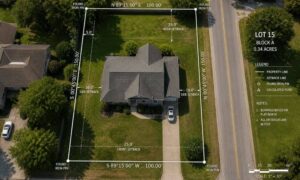
Older tracts often rely on metes-and-bounds descriptions written decades ago. Property corners may not match modern mapping. Fence lines may not follow deed lines. Access roads may exist physically but lack proper documentation.
Moreover, vacant land has not “proven” itself yet. A building forces questions about setbacks, easements, and utilities. Empty land does not. So those issues stay hidden until someone plans to build.
As a result, buyers discover problems during permitting, financing, or resale — when it’s too late to fix them easily.
An ALTA land title survey helps uncover those issues before they affect your investment.
What Makes an ALTA Land Title Survey Different?
You may wonder: “Can’t I just order a boundary survey?”
A boundary survey confirms where the property lines sit. However, an ALTA land title survey goes much further.
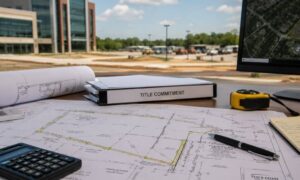
It ties the field measurements to the title commitment. It reviews recorded easements. It checks access. It identifies encroachments. It confirms improvements. It coordinates legal records with real-world conditions.
In other words, it connects what exists on paper with what exists on the ground.
That connection matters most when you plan to build, finance, or resell the land.
The 4 Biggest Surprises Vacant Land Buyers Face
Let’s talk about real-world issues that show up again and again.
1. Access That Looks Obvious — But Isn’t Legal
You may see a paved road touching your property. However, does your deed guarantee access?
Sometimes a driveway crosses a neighbor’s land without a recorded easement. Other times, access exists but does not meet lender or city standards.
Without legal access, you cannot build or finance the property easily. An ALTA land title survey verifies that access before closing.
2. The “Buildable Area” Shrinks
A 5-acre tract does not always give you 5 acres of usable space.
Drainage easements may cut across the middle. Utility corridors may limit where you can build. Setback lines may reduce your footprint. Flood zones may affect part of the parcel.
Therefore, your dream building site might sit inside a restricted area.
An ALTA survey identifies these limitations clearly so you can plan properly.
3. Boundary Gaps and Overlaps
Older parcels sometimes contain small overlaps with neighboring tracts. In other cases, legal descriptions leave small gaps.
While those issues may measure only a few feet, they can delay closing or financing. Lenders and title companies want clean boundaries.
An ALTA land title survey checks for these inconsistencies before money changes hands.
4. Encroachments Without Buildings
Vacant land often shows subtle encroachments.
A fence may sit several feet over the line. A farmer may use part of your tract. A driveway may clip the corner of the parcel.
Because nothing stands permanently on the land, people overlook these details. However, once you buy the property, the issue becomes yours to solve.
Why Lenders Often Require an ALTA Land Title Survey

Many buyers ask, “If this is just land, why does the bank care?”
The answer is simple. Banks care about risk.
Before they release funds, they need to know exactly what they’re backing. They want proof of clear legal access. They want defensible boundaries. They want to confirm there are no major encroachments or hidden conflicts tied to the property.
Without that level of certainty, a lender may pause the deal or delay closing altogether. That’s why, during financing, an ALTA survey for property closing often becomes part of the lender’s checklist. It gives them documented confirmation that the land on paper matches what exists on the ground.
Title companies look at it the same way. They use the survey to review access, easements, and boundary lines before issuing coverage. If questions remain unanswered, they may limit protection in the policy.
So even though the land appears empty, the financial exposure is not. Lenders and title companies rely on documentation, not assumptions.
When You Likely Need One
You should strongly consider an ALTA land title survey if:
- You are buying with a loan
- You plan to develop within the next two years
- The tract is large or irregular
- The legal description is old
- The purchase price is significant
- You plan to subdivide later
In these cases, the survey acts as risk protection.
When You Might Not Need One
On the other hand, you may not need an ALTA survey if:
- You are buying a small residential lot in an established subdivision
- A recent, detailed survey already exists
- You are paying cash and do not plan to build
Still, skipping the survey does not remove the risk. It only shifts the timing of discovery. Problems found after closing cost more to fix.
Why Vacant Land in Growing Areas Requires Extra Caution
Growth changes everything.
As cities expand, land values rise. Neighbors develop nearby tracts. Roads improve. Utilities expand. Property lines gain importance.
In areas like Newnan and across Georgia, development activity increases pressure on boundaries and access. Small errors become large disputes.
Because of that, documentation now matters more than ever. An ALTA land title survey provides that documentation early.
Think of It as Insurance Before You Build
Vacant land feels open and full of possibility. However, possibility also brings uncertainty.
An ALTA survey answers key questions:
- Where exactly do I own?
- Can I legally access the property?
- Can I build where I plan?
- Will my lender approve the deal?
- Will a future buyer face fewer problems?
Those answers protect your investment.
Final Thoughts
Vacant land may look simple, yet legally it can hide serious complications.
An ALTA land title survey does not just measure dirt. It verifies access, confirms boundaries, reveals restrictions, and supports financing decisions. Most importantly, it uncovers problems before they cost you money.
If you are under contract on vacant land, the best time to ask questions is before closing. Talk with a licensed land surveyor about your goals. Share the parcel details. Ask whether an ALTA survey fits your situation.
Because when it comes to land, clarity beats assumptions every time.