If you plan to build, you will likely need a home survey before you apply for a permit. The city needs clear proof of where your house sits and how far it is from your property lines. A rough sketch will not work. A home survey shows exact measurements, so your plans match local rules and avoid delays.
When Is a Home Survey Required for a Building Permit?
A home survey is usually required when your project affects where something will be built on your lot. This includes adding a garage, building a shed, or expanding your home.
If your plans involve placement or spacing, the city needs accurate measurements. Without them, the permit review can stop or get sent back for changes.
Why Ringgold Needs Accurate Site Details Before Approval
Before a permit gets approved, someone checks your plans against your actual property. They look at how close your structure sits to the edges of your lot. They also check how it lines up with your house and driveway.
Guesses do not help here. The city relies on real measurements. A home survey gives them what they need to review your plans without going back and forth.
What Counts as a Home Survey for Permit Applications?
A home survey is a drawing based on field measurements. A surveyor visits your property and marks key points. Then they create a plan that shows your lot and everything on it.
Not every document will work. A sketch, an old listing photo, or a basic plat often lacks detail.
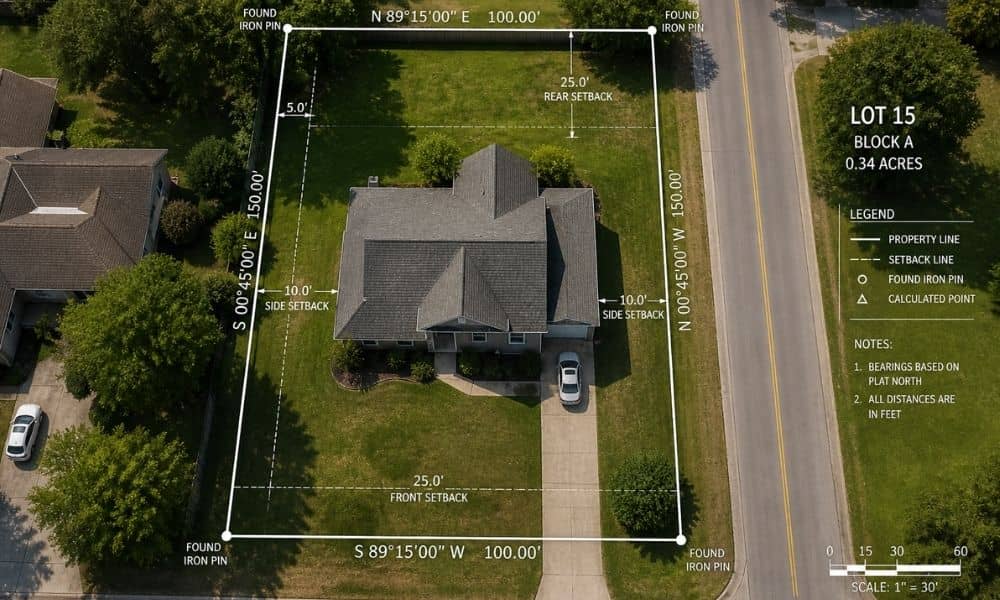
A usable survey should include:
- The full shape of your lot
- The location of your home
- Clear distances between structures and property lines
That level of detail helps the city trust your layout.
What Do Permit Reviewers Check on Your Survey?
When you submit your permit, the reviewer looks for specific details. They need to confirm that your project fits within the allowed space.
They usually check:
- Where your house sits on the lot
- Where you plan to build
- The distance between structures and property edges
- Access points like driveways
If something is missing, your application may get delayed.
Why Setback Requirements Matter
Setbacks control how close you can build to your property line. Every city uses them, and Ringgold follows the same idea.
For example, a shed may need to stay a few feet away from the edge of your lot. A home addition may have its own spacing rules.
Without a home survey, you cannot measure those distances with confidence. That is where problems begin. Some projects need to be changed before approval, and that costs time.
When a Simple Sketch Is Not Enough
Some homeowners try to draw their lot by hand. They guess where things sit and submit that with their permit. At first, it may seem fine. Small mistakes can turn into bigger problems.
A structure might end up too close to the edge. A driveway could cross into a restricted area. A new addition may not fit the space.
Without clear measurements, it is hard to know exactly where your property lines are before you build. That is usually where issues start. The city may reject the plan, and you have to fix it before moving forward.
What Happens If You Apply Without a Home Survey
Many permit delays come from missing or unclear site details.
Common issues include:
- No clear measurements
- Outdated property layout
- Missing structures on the plan
- Conflicting information
When this happens, the city asks for updates. That slows everything down. A clear home survey helps avoid that.
How Early Should You Get a Home Survey?
Do not wait until the last step. Plan your home survey early.
When you have accurate measurements, you can design your project the right way from the start. If there is not enough space, you can adjust before submitting your plans.
That saves time and avoids last-minute changes.
How a Home Survey Helps Your Project Move Forward
A home survey does more than check a box. It helps your project stay on track.
Your contractor gets a clear layout. There is less guessing on where things should go. The city can review your plans faster because everything lines up with real measurements.
Many homeowners get their survey early when they are getting ready for permit approval. It keeps the process simple and avoids extra steps.
It also reduces mistakes during construction. Builders can place everything in the right spot the first time.
What to Prepare Before Requesting a Home Survey
Before you call a surveyor, gather a few details.
You should have:
- Your property address
- A general idea of your project
- Any documents you already have
Even if you do not have much, you can still move forward. Sharing your plans early helps the surveyor focus on what matters.
Do All Projects Require a Home Survey?
Not every project needs one. Small repairs or indoor work usually do not.
Projects that change where something sits on your lot often do. This includes new structures, additions, or outdoor features.
If placement matters, a home survey is usually required.