
If you’re buying a home or land, you’ve probably noticed one thing already: everything costs more than expected. Between higher home prices, insurance, and closing fees, budgets get tight fast. Yet there’s one cost that still catches many buyers by surprise—the average cost for a land survey.
Many people assume a land survey is cheap, quick, or even optional. Then the quote comes in, and suddenly it feels like another financial hit no one warned you about. So why is this happening, and more importantly, how can you avoid getting caught off guard?
Why land survey costs are rising right now
Across the country, housing-related costs have gone up, and land surveys are no exception. However, this isn’t random. Several real factors push prices higher, especially in growing or semi-rural areas like Ringgold.
First, demand has increased. More buyers want clear property lines before closing. Lenders and title companies also request surveys more often to reduce risk. As a result, surveyors stay busy year-round.
At the same time, surveyors face higher operating costs. Insurance, licensing, equipment, and labor all cost more than they did a few years ago. Surveying also relies on skilled professionals, and fewer people enter the field. Because of that, experienced surveyors are in high demand.
When demand rises and supply tightens, prices usually follow. That’s exactly what’s happening now.
What is the average cost for a land survey?
This is where many buyers get confused. They search online and see national averages that sound reasonable. Then they receive a local quote that feels much higher.
In reality, the average cost for a land survey often falls within a broad range. Some simple residential surveys cost less. Others cost much more. The price depends on the property, not just the zip code.
A small, flat lot in a newer subdivision costs less to survey. On the other hand, a larger parcel, an older property, or land with unclear records takes more time. More time means more cost.
So while averages help set expectations, they don’t tell the full story.
Why buyers feel blindsided by survey pricing

Most homebuyers don’t deal with surveys often. Because of that, they underestimate the work involved. Many assume surveyors just “measure the lot” and move on.
In truth, a survey starts long before anyone steps on your property.
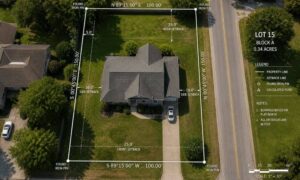
Surveyors research old deeds, plats, and public records. They look for past boundary descriptions, easements, and right-of-way issues. If records conflict or date back decades, research alone can take hours.
After that, fieldwork begins. Crews locate property corners, measure distances, and document features. In wooded or uneven areas, this takes longer. Poor access can slow things down even more.
When buyers don’t expect this level of effort, the price feels shocking.
Hidden factors that push survey costs higher
Several issues can raise costs without buyers realizing it. These surprises show up often in Ringgold and nearby areas.
Older properties cause one of the biggest jumps in price. Over time, boundary descriptions change, markers disappear, and records conflict. Sorting that out takes skill and patience.
Terrain also matters. Sloped land, thick tree cover, or rocky ground slows fieldwork. Even a smaller lot can cost more if conditions are tough.
Another factor involves timing. When buyers wait until the last minute, they often need rushed service. Expedited work costs more because surveyors must rearrange schedules.
Each of these issues adds time. And in surveying, time drives cost.
When survey costs surprise buyers the most
Certain situations almost guarantee sticker shock.
Buyers who purchase land outside a subdivision often face higher costs. These parcels usually lack clear markers and updated plats.
People buying older homes also run into issues. Fences, sheds, and driveways may cross property lines. Surveyors must confirm what belongs where.
Construction plans create another surprise. Lenders and builders often require more detailed surveys. That level of detail increases both work and price.
In each case, buyers didn’t plan for the added complexity. As a result, the quote feels unexpected.
Why waiting makes everything worse
Timing plays a huge role in survey pricing. Buyers who delay ordering a survey often pay more.
When a closing date approaches, options shrink. Fewer surveyors have open schedules. Those who do may charge more for a fast turnaround.
Waiting also limits your ability to compare quotes. Instead of choosing the best fit, you choose whoever is available.
Planning early gives you control. You get clearer pricing, better timelines, and less stress.
How to avoid getting caught off guard
The good news is that buyers can avoid most surprises with a little planning.
First, ask early if a survey is required. Don’t assume your lender or title company will tell you right away.
Next, ask what type of survey you need. Not every situation requires the same level of detail. Ordering the wrong survey wastes money.
Also, share accurate information with the surveyor. Property size, access points, and known issues help them quote accurately.
Finally, build the survey into your budget from the start. When you expect the cost, it stops feeling like a shock.
Why averages don’t tell the full story
Many buyers focus on averages because they want certainty. However, surveying doesn’t work that way.
The average cost for a land survey reflects many different property types and situations. Your property may fall above or below that number.
Instead of chasing the lowest price, focus on clarity and accuracy. A proper survey protects you from boundary disputes, title issues, and costly mistakes later.
In the long run, that value matters more than saving a few dollars upfront.
Final thoughts for homebuyers
Land survey costs are rising, but they aren’t rising without reason. Increased demand, higher operating costs, and property complexity all play a role.
Buyers in Ringgold feel caught off guard because surveys often come late in the process. When that happens, prices feel sudden and unfair.
However, knowledge changes everything. When you understand what drives survey costs and plan ahead, you stay in control.
A land survey isn’t just another fee. It’s a safeguard for one of the biggest purchases you’ll ever make. Planning for it early helps you close with confidence instead of stress.