When a major highway suddenly shuts down, most people assume something dramatic happened on the surface — a crash, a landslide, or a construction error. However, in a recent viral case, the real cause started underground. A damaged water main slowly weakened the soil below the road until the pavement could no longer hold the load. As a civil engineer, I see this pattern more often than people expect. While the public calls it a sinkhole, the failure usually begins with water, soil movement, and loss of support below the pavement. More importantly, the same type of failure can happen on private property, commercial sites, and parking areas — not just highways.
The Failure Didn’t Start at the Road Surface
At first glance, a road collapse looks sudden. One day traffic flows normally. The next day, a hole appears and lanes close. Yet the surface rarely fails first.
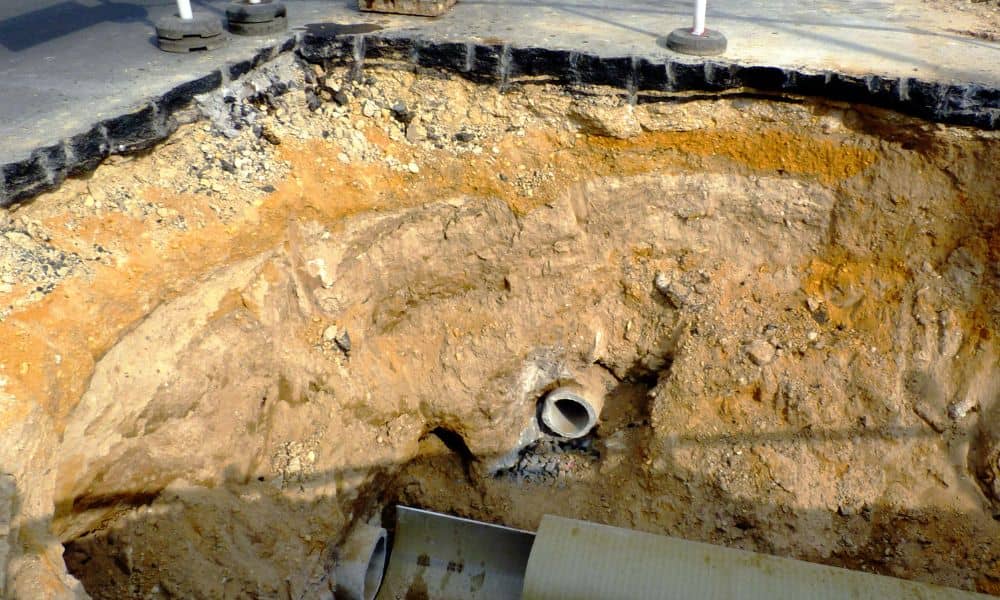
Instead, the problem usually begins with a leaking or broken water pipe buried under the roadway. Pressurized water escapes into the surrounding soil. Then, as that water moves, it carries fine soil particles with it. Gradually, the ground that once supported the pavement starts to disappear.
Meanwhile, everything above still looks stable. Drivers pass over the same spot again and again. However, each vehicle adds weight and vibration. Over time, the empty space underground grows too large. Eventually, the pavement drops into that void.
Therefore, what looks like a sudden disaster actually develops step by step.
Why Water Main Breaks Create Bigger Problems Than Expected
Water moves with force, especially inside pressurized utility lines. Once a crack forms, the escaping flow does more than create a wet area. It actively reshapes the soil structure underground.
In many cases, erosion spreads sideways, not just upward. That means the damaged zone grows wider than the visible collapse. Consequently, repair crews often discover that the true affected area extends far beyond the first hole.
From a civil engineer point of view, this matters because surface patching alone will not solve the problem. If crews only fix the top layer, the weakened soil remains. Then the failure returns.
That is why proper repair always includes excavation, soil replacement, compaction, and utility correction — not just pavement work.
Traffic Load Turns a Hidden Problem Into a Public Crisis
Light traffic might not trigger a collapse right away. However, highways and busy corridors carry constant heavy loads. Trucks, buses, and delivery vehicles apply repeated pressure to the same pavement zone.
At the same time, vibration travels downward through the road structure. If soil support has already weakened, that vibration speeds up settlement. As a result, what might have stayed a minor underground void becomes a full surface failure.
This explains why many collapses appear in high-traffic areas first. The load simply exposes the hidden weakness faster.
For site owners, this same principle applies to commercial drive lanes and loading areas. Increased traffic often reveals buried infrastructure problems.
This Risk Exists Beyond Major Highways
Although the viral story focused on a highway shutdown, the engineering lesson applies everywhere. Underground water lines run beneath shopping centers, apartment complexes, office parks, and industrial yards.
In fact, private sites sometimes face higher risk because records may be incomplete. Older developments often lack accurate utility maps. Repairs may have happened years ago without full documentation. Therefore, no one realizes a line sits directly under a stressed pavement area.
A civil engineer reviewing a site looks for these hidden overlaps — where utilities, drainage paths, and traffic loads intersect. Those intersections often create the highest failure risk.
So while the news story feels distant, the risk feels very local.
Early Warning Signs Most Owners Miss
Surface failures rarely appear without clues. The problem is that the clues look small at first.
For example, a shallow dip in pavement may seem harmless. A recurring pothole might look like normal wear. A damp patch could appear after irrigation. Yet when the same symptom repeats in the same location, that pattern tells a story.
Engineers pay attention to patterns, not just events. Repetition signals an underlying cause. When pavement distress keeps returning, something below the surface keeps moving.
Because of that, investigation should begin early — before the repair bills grow.
How a Civil Engineer Evaluates the Situation
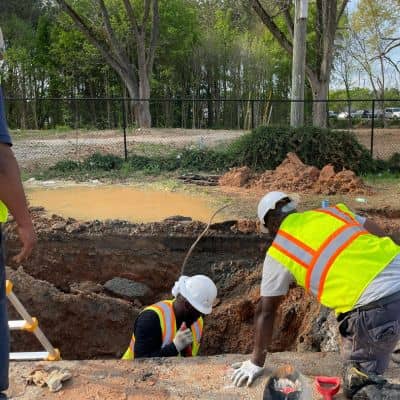
When clients call after repeated pavement trouble, a civil engineer does not start with the asphalt. We start with the system.
First, we review available utility records. Next, we study grading and drainage flow. Then we examine soil behavior and traffic load. After that, we compare distress locations with buried line paths. Step by step, the hidden relationships come into view.
Sometimes the fix involves utility repair. Other times drainage redirection solves the issue. In certain cases, soil stabilization becomes necessary. The correct solution depends on the cause, not just the symptom.
That systems approach separates engineering diagnosis from surface patchwork.
Prevention Costs Less Than Emergency Repair
Emergency road failures cost more than planned corrections — almost every time. Crews must mobilize quickly. Traffic control becomes urgent. Business access may suffer. Work happens under pressure, not efficiency.
By contrast, early engineering review allows controlled planning. Utility checks, targeted testing, and design corrections happen on schedule. Costs stay predictable. Disruption stays limited.
Therefore, proactive evaluation protects both budget and operations.
Clients often tell me they wish they had investigated sooner. That pattern repeats across many projects.
The Real Takeaway for Property Owners and Developers
The highway shutdown that made headlines did not happen because of bad luck. It happened because underground conditions changed until the pavement lost support.
That same chain of events can happen on smaller sites. The scale changes, but the physics stay the same.
A civil engineer focuses on what lies below — soil behavior, water movement, buried utilities, and load paths. When those elements stay aligned, surfaces remain stable. When they fall out of balance, failure follows.
So if pavement problems keep returning on a property, the smartest move is not another patch. Instead, look deeper. Investigate the cause. Fix the system.
Because in infrastructure, the biggest problems rarely start where you can see them.