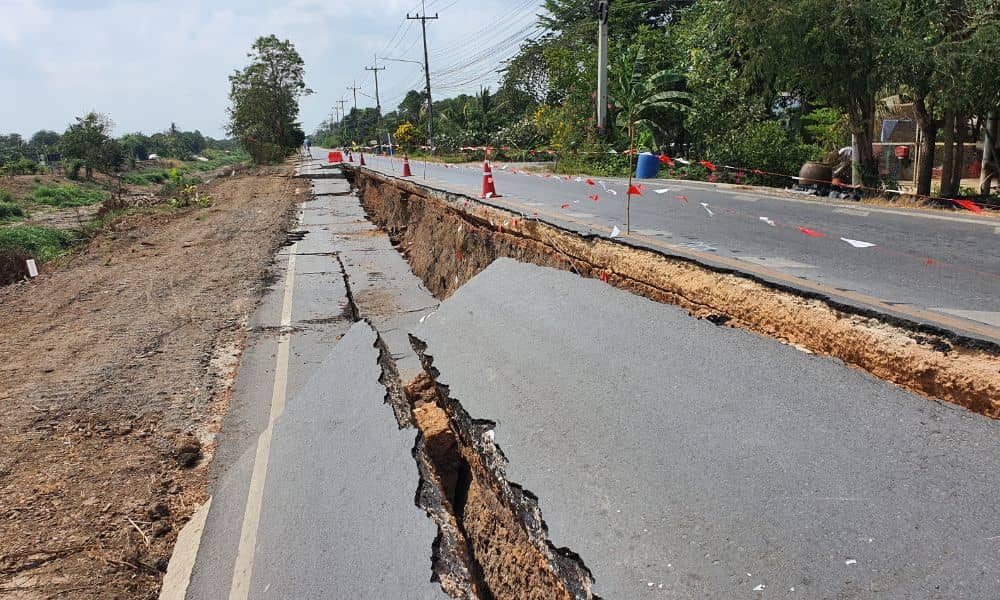
You may have seen a road closed after heavy rain. Crews show up, dig into the ground, and replace pipes or reshape sections of the road. At first, it looks like a quick fix. However, these repairs often point to something deeper. In many cases, the problem did not start with the road surface. Instead, it began with how water moved across the land. Over time, that movement caused erosion, pressure, and weak spots below the surface. Eventually, the damage became visible. This is where a topographic survey comes into play. It helps reveal how the land behaves before problems appear, not after—so you can better understand your land before any work begins.
How Water Quietly Shapes the Ground
Water follows the path of least resistance. It moves downhill, gathers in low areas, and speeds up on steeper slopes. Even a small change in elevation can shift its direction.
Because of this, land that looks flat may still guide water in ways that are not obvious. A slight dip can turn into a pooling area. A gentle slope can direct water toward a structure instead of away from it.
At the same time, many planning decisions rely on what people can see. That approach often misses the small elevation changes that matter most.
As a result, water begins to move in unexpected ways. Over time, that movement can weaken soil, shift materials, and create long-term issues.
What a Topographic Survey Reveals That You Can’t See
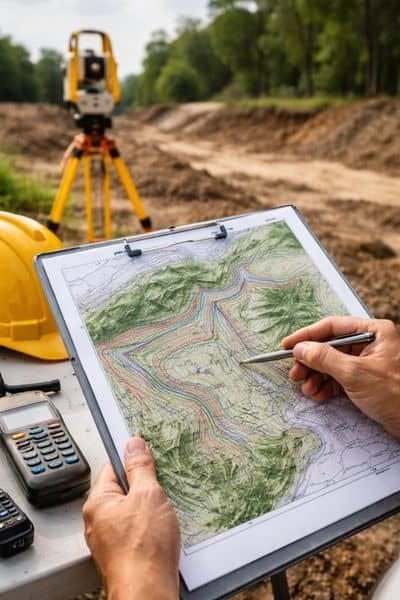
A topographic survey gives you a clear picture of your land. You can see how the ground rises and falls, where slopes change, and where low spots form.
Having this kind of clear elevation data makes it much easier to understand how water will move when it rains. Instead of guessing, you can spot the areas where water might collect or flow too fast.
That information makes planning so much simpler. You can position driveways, buildings, and drainage systems in the right places, letting them work with the land instead of against it. With these insights, your decisions are more precise, and you’re solving problems before they even start.
Why Drainage Planning Often Gets Overlooked
Drainage does not always get the attention it deserves. Many people focus on visible elements like design, layout, or materials. However, the way water moves across the site plays a major role in long-term performance.
In some cases, property owners assume the land will behave as expected. In others, they rely on rough estimates instead of measured data. These choices seem minor at first, but they lead to larger problems over time.
Without clear elevation data, it becomes easy to misread the land. Water may collect where it should not or move faster than planned. Once construction is complete, fixing these issues becomes more difficult.
What This Means for Properties in Ringgold, Georgia
Ringgold has a mix of rolling terrain and uneven ground. Because of this, water rarely stays in one place. It moves quickly during storms and follows natural slopes across the land.
This creates challenges for both small and large projects. A new home, a driveway, or even a yard improvement can face drainage issues if the land is not fully understood.
When a topographic survey is part of the planning process, these risks become easier to manage. You can see how water will move and adjust your plans before construction begins.
As a result, you avoid surprises that often show up after heavy rain.
How Better Planning Prevents Costly Changes Later
Fixing drainage problems after construction often requires major work. Crews may need to reshape the land, install new systems, or rebuild sections that were already completed.
However, when planning starts with accurate data, those steps become less likely. A topographic survey allows builders and designers to align their plans with the actual conditions on site.
This leads to smoother construction and fewer delays. More importantly, it helps prevent the need for rework that can increase both cost and stress.
Seeing the Land Before You Build
Recent road repairs show a clear pattern. The visible damage often traces back to how water was handled during planning. When the land is not fully understood, problems develop over time.
The same idea applies to any property. Whether you are building, improving, or preparing land, understanding elevation and drainage makes a difference.
A topographic survey gives you that understanding. It allows you to see what is not obvious and plan with confidence.
In the end, building on solid ground starts with knowing the ground itself.